
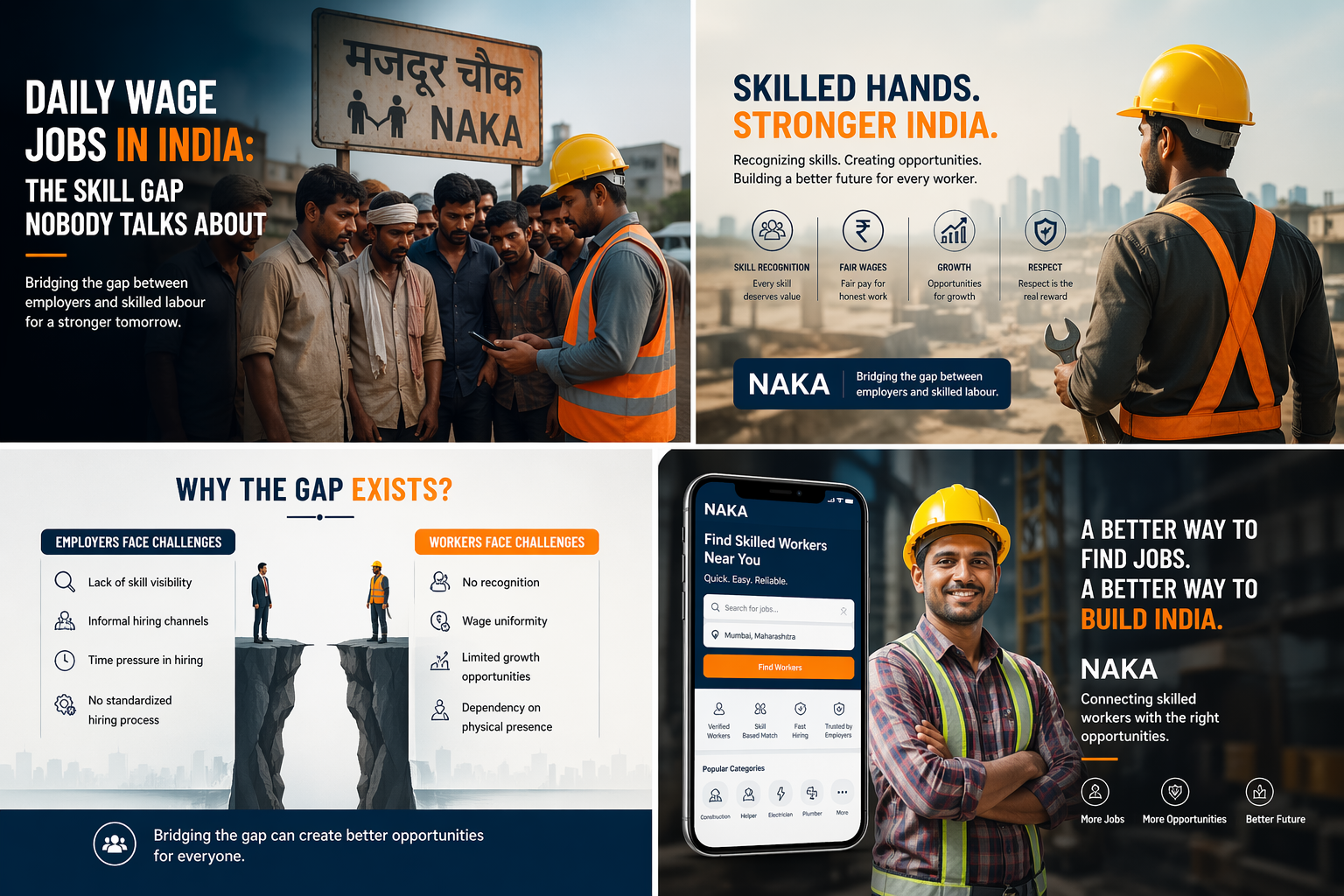
Daily Wage Jobs India form a critical part of the country’s workforce, supporting industries like construction, logistics, manufacturing, and services. Yet, despite the demand, there remains a persistent disconnect—employers struggle to find skilled workers, while workers struggle to receive fair recognition and consistent opportunities.
This gap is not just economic—it’s structural.
The Reality of Daily Wage Jobs in India
Across cities like Mumbai and Pune, Daily Wage Jobs in Mumbai and Daily Wage Jobs in Pune are often sourced through informal systems such as local hiring hubs or NAKA. These systems have been in place for decades but come with significant limitations:
- No structured verification of skills
- Limited visibility of worker experience
- Daily uncertainty for both employers and workers
While naka-based hiring is quick, it lacks the efficiency and reliability required in today’s fast-paced economy.
Why Employers Struggle to Find Skilled Labour
Even with a large workforce, businesses frequently face shortages of reliable and skilled labour. Here’s why:
1. Lack of Skill Visibility
Employers cannot easily assess whether a worker is truly skilled. There’s no digital record, certification, or rating system in most cases.
2. Informal Hiring Channels
Traditional methods like naka hiring restrict access to a broader talent pool. This makes it harder to find specialized or experienced workers.
3. Time Pressure in Hiring
Daily wage hiring often happens under urgency. Employers choose whoever is available rather than the most qualified.
4. No Standardized Hiring Process
Unlike corporate hiring, there is no structured system to match job requirements with worker capabilities.
Why Skilled Labour Is Not Getting Proper Appreciation
On the other side, skilled workers face a different set of challenges:
1. No Recognition Mechanism
A skilled worker and an unskilled worker are often treated the same in daily wage systems.
2. Wage Uniformity
Despite higher skill levels, many workers receive similar pay due to lack of differentiation.
3. Limited Growth Opportunities
Without documentation of experience, workers cannot showcase their expertise for better opportunities.
4. Dependency on Physical Presence
Workers must be physically present at naka points every day, limiting their ability to explore better-paying jobs.
Daily Wage Jobs for 12th Pass: A Growing Segment
A large portion of the workforce includes individuals seeking Daily Wage Jobs for 12th Pass candidates. These workers often possess basic education and adaptability but lack structured pathways to connect with better opportunities.
This creates a paradox:
- Employers need semi-skilled workers
- Workers are available but not properly matched
How to Get Daily Wage Jobs in a Changing Market
The process of How to Get Daily Wage Jobs is slowly evolving with technology. While naka systems still dominate, new digital approaches are emerging:
- Mobile-based job discovery
- Worker profiles with skill tagging
- Faster matching between employers and workers
- Reduced dependency on physical presence
This shift is helping both employers and workers move toward a more organized ecosystem.
The Role of Technology in Bridging the Gap
Modern hiring platforms and mobile applications are transforming Daily Wage Jobs India by:
- Creating digital identities for workers
- Enabling skill-based hiring instead of availability-based hiring
- Offering better visibility to both employers and workers
Instead of replacing traditional naka systems, these solutions are enhancing them—bringing structure, transparency, and efficiency.
The Way Forward
The future of Daily Wage Jobs in India lies in bridging the gap between skill and opportunity.
To achieve this:
- Employers must adopt structured hiring approaches
- Workers need platforms to showcase their skills
- The ecosystem must evolve beyond informal systems
A balanced approach—combining traditional naka familiarity with modern digital tools—can unlock better outcomes for everyone involved.
Conclusion
The challenge is not the lack of jobs or workers—it’s the lack of connection between the two.
As Daily Wage Jobs in Mumbai, Daily Wage Jobs in Pune, and across India continue to grow, the focus must shift toward skill recognition, fair compensation, and smarter hiring systems.
Only then can both employers and workers truly benefit from the vast potential of India’s daily wage workforce.